
Tip of the day – Greece opens eight new museums throughout 2026
Tip of the day – Greece opens eight new museums throughout 2026 https://staging.thecloudkeys.com/wp-content/uploads/2026/03/260320172122_enalion-arxaiotitvn-1-1024x604.webp 1024 604 Cloudkeys https://staging.thecloudkeys.com/wp-content/uploads/2026/03/260320172122_enalion-arxaiotitvn-1-1024x604.webp2026 is shaping up to be a significant year for Athens and its cultural scene, as several major museums are set to open. And if we add to this Thessaloniki and Sparta—cities that will also become significant hubs of museum culture—then 2026 will undoubtedly be the year of the museum.
In Athens
Old Acropolis Museum:
In 2025, a new collaboration began between the Athens City Archaeological Service, the Ministry of Culture, and NEON with the Acropolis Museum, which explores a dialogue between Greek antiquities and artifacts from ancient civilizations of the southeastern Mediterranean and the Middle East, and the multifaceted work of acclaimed artist Michael Rakowitz. The trilogy concludes in May 2026 at the Old Acropolis Museum on the southeast side of the Parthenon, which is being upgraded with co-funding from the European Regional Development Fund. The historic building is being modernized by adopting an architectural design that creates a contemporary storage and exhibition environment. The new commission to Michael Rakowitz focuses on stories of diaspora and how objects from different historical, geographical, and archaeological contexts shape narratives that stem not only from geographical entities but also from historical ones. At the same time, the archaeological exhibition “Athens: The Immortal City” will be hosted in the renovated museum, which will also function as a conservation laboratory for archaeological finds, open to the public.
Expansion of Museum of Cycladic Art:
Since spring 2025, work has begun on the museum’s entrance on the Neofytou Douka Street side, with the aim of completely redesigning the spaces to enhance the visitor experience. The changes, both inside and out, focus on inclusion, accessibility, and sustainable development, and coincide with the 40th anniversary of the Museum of Cycladic Art. It is therefore reasonable to expect various anniversary events from the museum in the coming months. Until then, note that in March, the iconic artist Jeff Koons will present his work “Balloon Venus Lespugue (Orange)” (2013–2019), which will engage in a dialogue with ten replicas of Upper Paleolithic “Venus” figurines, raising the question of how the universal archetype of fertility transcends time and space.
Tatoi Palace Museum:
After years of studies and restoration work, the former royal estate of Tatoi is set to open this fall—at least its basic museum facilities—heralding a new era. The estate will operate as an open park for visitors, while the historic buildings will house museum exhibitions. In fact, nine of the Tatoi buildings will host complementary and support functions for the Ministry of Culture’s services, such as the workshops of the Conservation Directorate, but will also be used for broader cultural events.
Underwater Antiquites Museum (Piraeus):
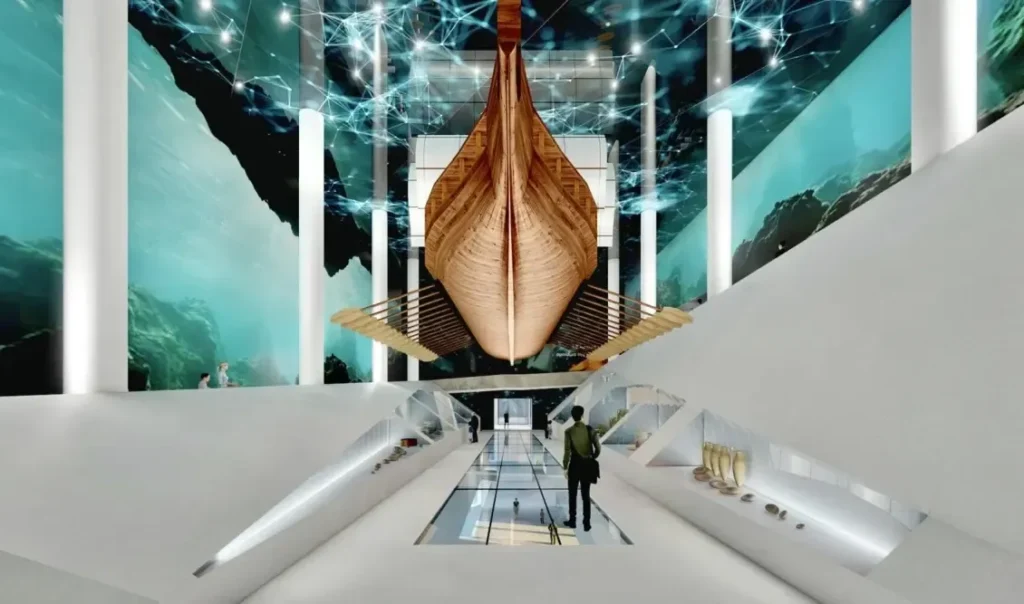
Piraeus will soon gain another unique venue that will showcase the treasures of the Greek seas. We are referring to the National Museum of Underwater Antiquities, which will be connected to the SILO industrial building on its southwest side to create a state-of-the-art museum with over 2,500 exhibits and a host of technological applications. The project is being funded with €93 million from the Ministry of Culture’s Recovery Fund.
The Museum Enclosure of the “Desmotes” of Faliro:
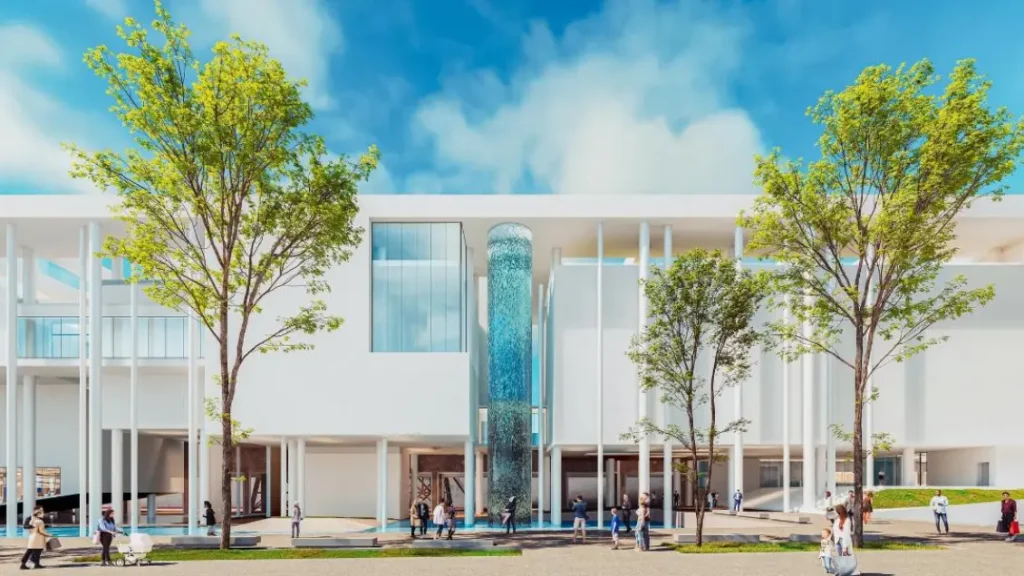
The construction of the Stavros Niarchos Foundation Cultural Center between 2009 and 2016 led to a new phase of excavations at the site of the old hippodrome. Thus, the 79 “Desmotes” were gradually discovered on the SNFCC Esplanade, a remarkable archaeological find relating to a turbulent period in the history of Athens during the second half of the 7th century B.C., when men in iron shackles were executed and buried in a mass grave. With a budget of 6,500,000 euros, the Ministry of Culture has proceeded with the presentation of the “Chained Men” by creating an exhibition within the protective museum structure at the archaeological site, a project expected to be completed by 2026. The area containing the skeletons will not be open to the public, out of respect for the dead; however, the museum exhibition will aim to convey the historical significance of the discovery and help visitors understand the atmosphere of the site.
Courtyard of Wanders museum in Plaka:
In Monastiraki, the so-called “Courtyard of Wonders” comes to life through the Museum of Modern Greek Culture. Here, an entire city block is transformed into a living neighborhood of the past, where the architecture, folk art, and daily life of centuries past coexist in an immersive journey.
Greek Handkerchief Manufacturer:
In Metaxourgeio, a different museum tells a more “quiet” but equally important story: that of labor and art. The Mantiladiko – Museum of Printed Textiles highlights the pre-industrial know-how, patterns, and techniques that once adorned everyday life, breathing new life into an almost forgotten art.
Out of Athens
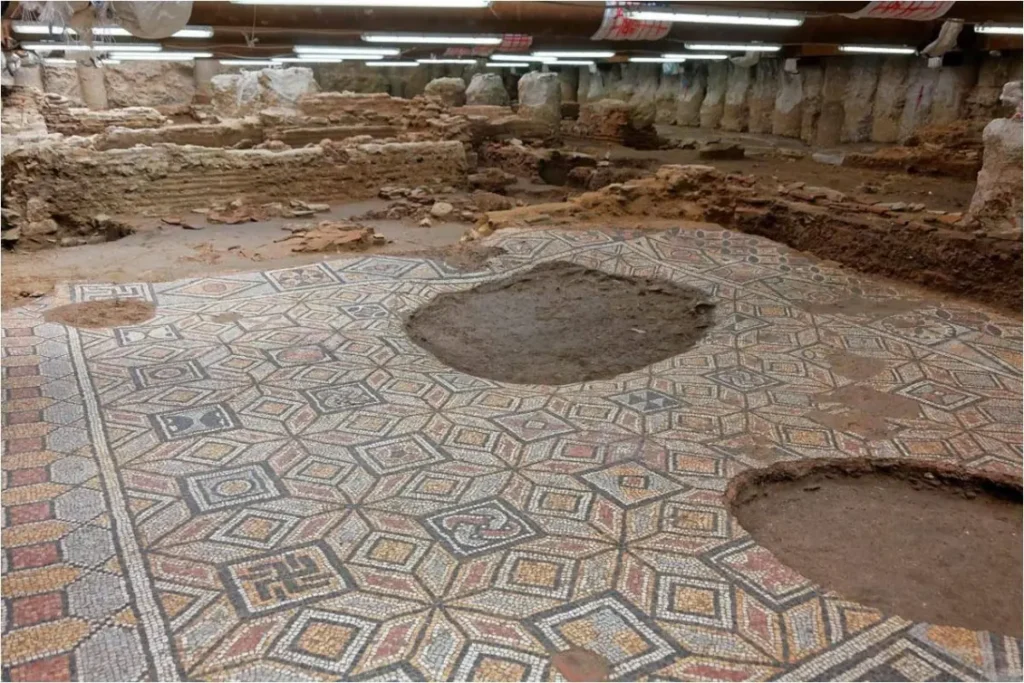
The open-air Museum of Thessaloniki Metro Artifacts, which is being created in Pavlos Melas Metropolitan Park on the western side of the city, a unique example where modern infrastructure meets archaeology. The Venizelos Station is being transformed into a “museum within a museum,” revealing the Byzantine urban fabric and allowing passengers to traverse centuries of history every day.
In the south of Greece, in Peloponnese region, Sparta is getting its new archaeological museum, a project that aims to reestablish the historical identity of Laconia. With modern facilities and universal accessibility, the new museum bridges the glorious past with the needs of today.