
It is a fact that during your trip to Greece you will not have any difficulty to communicate with locals, as most of them speak English quite well, not only in tourist areas, but in most places – Greeks usually have english lessons from primary school, and they also start learning a second language from the same age (french and german are the most common). Ok, maybe in some remote villages in mountainous areas you will find some elderly people that they don’t speak english, but even there they will find the way to communicate and help you. At least, you will eat well even without speaking.
But, are you sure you don’t want to impress a local by starting a discussion in greek? We know it’s a difficult language, but not so much. We are sure you already know some basic words in greek, and here you could learn some more before your trip to Athens.
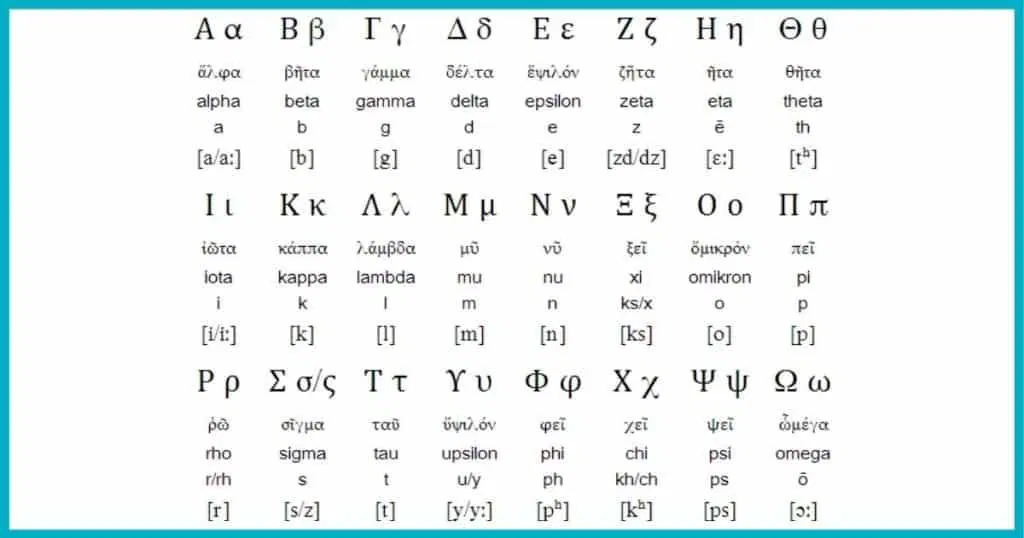
But before starting our greek lesson, let’s learn some interesting and fun facts about greek language: in the end, it’s the ancient language of the world.
- Greek is the oldest recorded living language. It’s an Indo-European language spoken in Greece and Cyprus. It is one of the official languages of the European Union and has over 13 million native speakers in the world. There are large Greek-speaking populations in Albania, Turkey, Italy, Western Europe, the EU, Canada, Argentina, Brazil, and Australia.
- Until 1976, there were two different official versions of Greek: demotic and katharevousa. In 1976, however, the Greek government adopted Demotic as the sole official language.
- Vowels were first used in the Greek alphabet.
- Originally, it was inscribed from right to left.
- The latin, coptic and cyrillic alphabets (among others) are based on the greek alphabet
- According to the Guiness Record (1990), the longest word ever used in literature is Greek: you will find it in one of Aristophanes’ plays and it refers to an imaginary meal comprised of several species of meat. It has 171 letters and it’s the λοπαδοτεμαχοσελαχογαλεοκρανιολειψανοδριμυποτριμματοσιλφιοκαραβομελιτοκατακεχυμενοκιχλεπικοσσυφοφαττοπεριστεραλεκτρυονοπτοκεφαλλιοκιγκλοπελειολαγῳοσιραιοβαφητραγανοπτερύγων. Ready trying to say it? We have it in greeklish too: lopadotemachoselachogaleokranioleipsanodrimhypotrimmatosilphiokarabomelitokatakechymenokichlepikossyphophattoperisteralektryonoptekephalliokigklopeleiolagoiosiraiobaphetraganopterygon
- 30% of english words are of greek orgin. Some examples are democracy, marathon, butter, telephone, alphabet. Almost every English word that starts with PH, e.g philosophy, physical, photo, phrase, phoneme, phobia, phenomenon, philanthropy
- When english is translated into greek, the text usually expands by 5-10%
- Greek words have three genders.
- Greek uses a different alphabet from English, and even the punctuation is different! For example, the Greek question mark is a semicolon (;), and is used at the end of questions.
- Greek was the language of education in the Roman Empire
- The first ever greek publication was discovered in 1900 in Crete by the archaeologist Sir Arthur Evans: a large number of clay tablets inscribed with the syllabic scripts Linear A and Linear B that were used by the Minoans and Myceneans during the 2nd millennium BC, primarily in religious inscriptions and administrative records. Linear A predates Linear B and is probably the oldest surviving record of an ancient Greek dialect
So, now you are ready to learn one of the oldest languages in the world. It is now as has as you imagine.
- Hello/Hi: Γειά σου (YAH-soo)
- Welcome: Καλως ήλθατε (Kalo-so-ri-sateh)
- Do you speak English?: Μιλάτε αγγλικά; (Mee-LAH-teh ag-li-KAH)
- I don’t speak Greek: Δεν μιλαω ελληνικα) (Den milao ellinika)
- I don’t know: Δεν γνωρίζω (Den gnorizo)
- Sorry, I don’t understand: Συγνώμη, δεν καταλαβαίνω (seeg-NO-mee, then kah-tah-lah-VEH-no)
- Excuse me: Συγνώμη (Seeg-NO-mee)
- Nice to meet you: Χάρηκα πολύ (HA-ree-ka po-LEE)
- How are you?: Tι κανείς; (tee-KAH-nis)
- Fine, and you?: Καλά, εσύ; (kah-LAH, EH-see)
- Good morning: Καλημέρα (kah-lee-MER-ah)
- Good afternoon/evening: Καλησπέρα (kah-lee-SPER-ah)
- Goodnight: Καληνύχτα (kah-lee-NEEKH-tah)
- Thank you: Ευχαριστώ (eff-kha-ri-STOE)
- Please/You’re welcome: Παρακαλώ (para-kah-LOE)
- My name is…: Με λένε… (may LEH-neh)
- What is your name?: πως σε λένε; (pos-oh LEH-neh)
- Goodbye: Γειά σου/σας (YAH-soo or YAH-sas, if addressing a group.
- See/Talk to you later: Τα λέμε (tah-LEH-meh)
- Yes: Ναί (neh)
- No: Όχι (OH-hee)
- Excuse me/Sorry: Συγνώμη (See-GHNO-mee)
- Where is the bathroom?: Πού είναι η τουαλέτα; (Poh-EE-nay ee tua-LEH-tah)
- Cheers!: Στην υγειά μας! (STIN-eh YAH-mas)
- Bottoms up!: Ασπρο πάτο! (AHS-pro PAH-toh)
- How much is it?: Πόσο κάνει αυτό; (POH-soh KAH-nee af-TOH)
- Help!: Βοήθεια! (voh-EE-thee-yah)
- How do I get to…?: Πώς πάω στο…; (Pos pao sto…?)
- Where is the metro?: Πού είναι το μετρό; (poo EE-nehh toh meh-TROH)
- Airport: Αεροδρόμιο (Aero`dromeeow)
- Airplane: Αεροπλάνο (Aero`plahnow)
- Port: Λιμάνι (Lee`mahnee)
- Ship: Πλοίο (`Pleeoh)
- Taxi: Ταξί (tahk-SEE)
- Taxi Station: Πιάτσα ταξί (Pee`ahtsa tahk-SEE)
- Bus: (leh-oh-foh-REE-oh)
- Bus Stop: Στάση λεωφορείων (‘Stasee leh-oh-foh-REE-oh)
- Bus Station: Σταθμός λεωφορείων (Stahth`mos eh-oh-foh-REE-oh)
- Where does this train/bus go?: Που πάει αυτό το τρένο/λεωφορείο; (Pou paei afto to trno/leoforeio)
- Train: Τρένο (`Traynow)
- Train Station: Σταθμός τρένου (Stahth`mos `Traynou)
- Ticket: Εισιτήριο (Eesee`teereeow)
- Bus Ticket: Εισιτήριο λεωφορείου (Eesee`teereeoweh-oh-foh-REE-oh)
- Bike: Ποδήλατο (poh-THEE-lah-toh)
- Museum: Μουσείο (Moo`seeow)
- Post Office: Ταχυδρομείο (Tacheedrow`meeow)
- Beach: Παραλία (Para `leeah)
- Sea: Θάλασσα (‘ Thahlahsah)
- Island: Νησί (Nee ‘see)
- Sites & Attractions: Αξιοθέατροο (Axeeow`theatah)
- Hospital: Νοσοκομείο (Nowsowko`meeow)
- Pharmacy: Φαρμακείο (Pharma`keeow)
- Doctor: Γατρός (Yia`tros)
- First Aid: Πρώτες Βοήθειες (‘Prowtes Vo ‘eethie)
- Help: Βοήθεια! (Vo ‘eetheeah)
- Restaurant: Εστιατόριο (Estiatorio)
- Tavern: Ταβέρνα (Ta ‘vernah)
- I’d like the bill please: Θα ήθελα τον λογαριασμό, παρακαλώ (Tha ithela ton logariasmó parakaló)
- Where is the bathroom?: Πού είναι η τουαλέτα (Pou eínai i toualéta)
- I am a vegetarian: Ime chortofagos
- May I have a menu?: Μπορώ να έχω το μενού; (Bo ‘row na ‘echow to me ‘nu?)
- Bon apetit: Καλή όρεξη! (Kali orexi)
- What do you suggest?: Τι μου προτείνετε; (Tee mu pro ‘teenetay)
- What are your specialties?: Ποια είναι η σπεσιαλιτέ σας; (Peeah ‘eenay ta specialee ‘tay sas)
- Plate: Πιάτο (pee-AH-toh)
- Water: Νερό (neh-ROH)
- Coffee: Καφές (kah-FEHS)
- Beer: Μπύρα (BEE-rah)
- Wine: Κρασί (Kra-see)
- Coffee: Καφές (Ka`fes)
- Coffee with milk: Καφές με γάλα (Ka`fes me ‘gala)
- Sweet: Γλυκός (Glee`kows)
- Medium Sweetness: Μέτριος (`Mehtreeows)
- No sugar: Χωρίς Ζάχαρη, Σκέτος ( ‘Sketos)
- Tea: Τσάι (Tsaey)
- Tea with milk: Τσάι με γάλα (Tsaey me ‘gala)
- Tea with lemon: Τσάι με λεμόνι (Tsaey me le ‘moni)
- Squeezed juice: Φυσικός χυμός (Physee ‘kows Chee ‘mows)
- Breakfast: Πρωινό (Prowee ‘know)
- Lunch: Μεσημεριανό (Meseemereea ‘know)
- Dinner: Δείπνο (Dipno)
- Food: Φαγητό (Fahgee ‘tow)
- Egg: Αυγό (Av ‘go)
- Omelette: Ομελέττα (Ome ‘letah)
- Meat: Κρέας (‘ Krayahs)
- Fish: Ψάρι (‘ Psahree)
- Chicken: Κοτόπουλο (Kow ‘towpulow)
- One suvlaki with all inside/without onion: Ένα σουβλάκι με όλα/χωρίς κρεμμύδι (Ena souvláki me apóla/horis kremídi)
- Salad: Σαλάτα (Sah ‘lahatah)
- Greek Salad: Χωριάτικη (Choree ‘ahteekee Sah ‘lahtah)
- What time is it?: Τι ώρα είναι; (tee OR-ah EE-neh)
- Today: Σήμερα (SEE-meh-rah)
- Tomorrow: Αύριο (AH-vee-ree-oh)
- Yesterday: Χθες (KTHES)
- Monday: Δευτέρα (Def ‘tera)
- Tuesday: Τρίτη (‘Treetee)
- Wednesday: Τετάρτη (Te ‘tartee)
- Thursday: Πέμπτη (‘Pembtee)
- Friday: Παρασκευή (Paraske ‘vee)
- Saturday: Σάββατο (‘Savatow)
- Sunday: Κυριακή (Keyreeah ‘kee)
- Left: Αριστερά (ah-ree-STEH-rah)
- Right: Δεξιά (thek-SEE-ah)
- Straight ahead: Μπροστά (BROH-stah)
- Behind: Πίσω (PEE-soh)
- I love Greece: Αγαπώ την Ελλάδα (Ah-gah-POH teen Eh-LAH-tha)
- I love you: S’agapo
Maybe now it’s time to count on greek too?
- One: Ένα (EH-nah)
- Two: Δύο (DEE-oh)
- Three: Τρία (TREE-ah)
- Four: Τέσσερα (TEHS-seh-rah)
- Five: Πέντε (PEHN-deh)
- Ten: Δέκα (DE-kah)
- Hundred: Εκατό (ΕΚ-atoh)